How HCS 411GITS Software Was Built: Smart AI Traffic Technology Explained
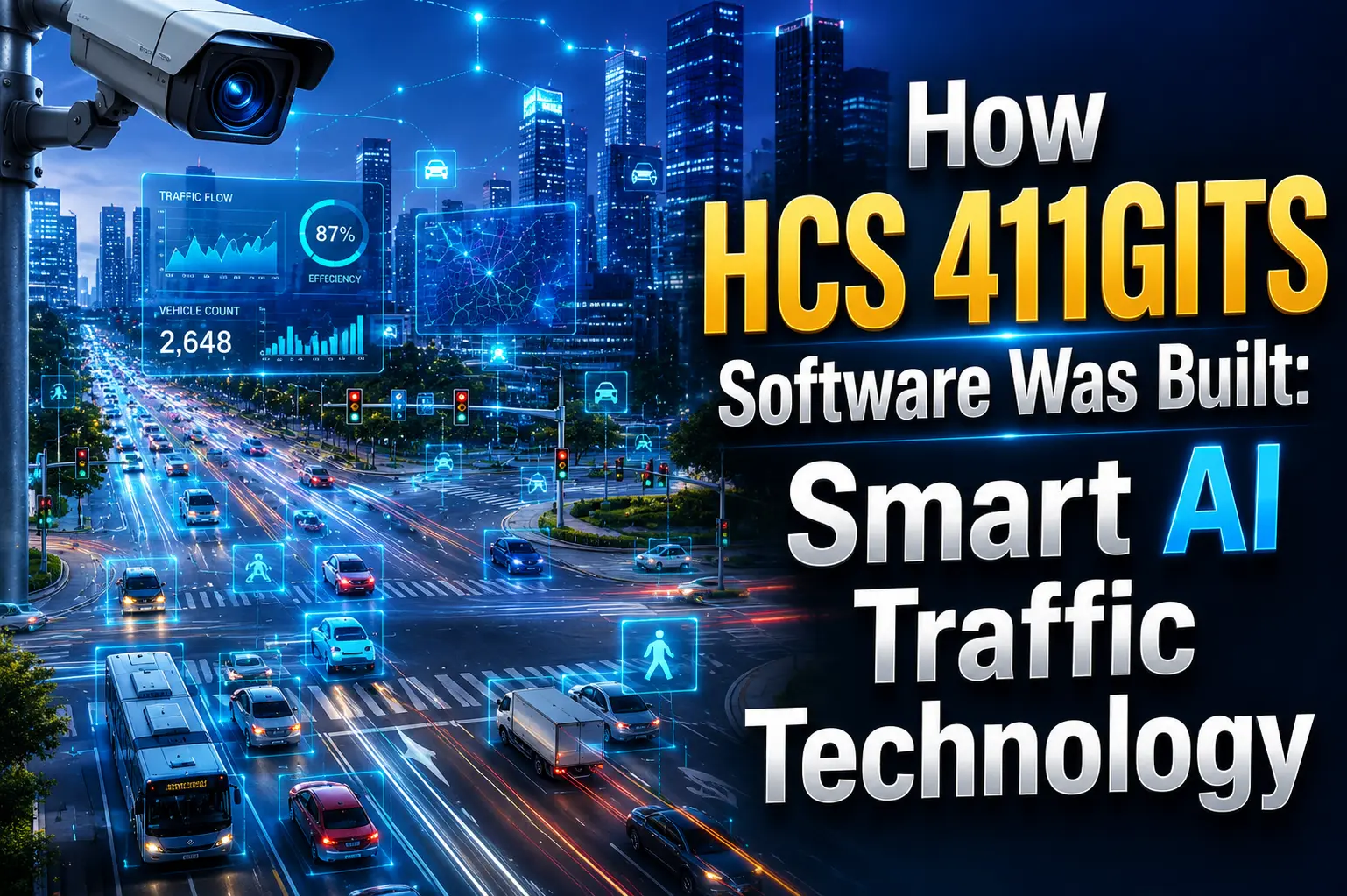
Traffic problems are growing rapidly in modern cities. Roads become crowded, traffic lights fail to adapt, emergency vehicles get delayed, and commuters waste hours every week in congestion. Traditional traffic management systems often cannot handle the increasing pressure of urban transportation.
To solve these challenges, developers created HCS 411GITS, a powerful intelligent transportation system designed for smart city infrastructure. This advanced software uses artificial intelligence, machine learning, IoT integration, real-time data processing, and hybrid edge-cloud computing to improve traffic flow and road safety.
Unlike older traffic systems that depend on fixed signal timing, HCS 411GITS continuously studies live traffic conditions and automatically adjusts traffic signals for better traffic flow optimization. The platform helps cities reduce congestion, improve emergency response times, and prepare for the future of autonomous transportation.
Why HCS 411GITS Was Created
Many cities still use outdated traffic control systems that rely on manual operations and old traffic models. These systems cannot quickly respond to traffic jams, accidents, road closures, or changing traffic patterns. As cities grow larger, transportation systems become more difficult to manage.
The creators of HCS 411GITS wanted to build a smarter solution capable of handling modern urban mobility challenges. Their goal was to create a Geo-Intelligent Traffic Software that could make fast decisions using AI traffic prediction and real-time traffic insights.
Another important goal was making traffic management easier for operators. Instead of watching hundreds of screens manually, traffic teams can now use operator-centric dashboards that display live traffic updates, congestion alerts, accident reports, and route optimization suggestions in one place.
Main Features of HCS 411GITS
- AI Traffic Prediction
One of the most powerful features of HCS 411GITS is AI traffic prediction. The system uses machine learning algorithms to study traffic patterns, road activity, vehicle movement, and historical traffic data.
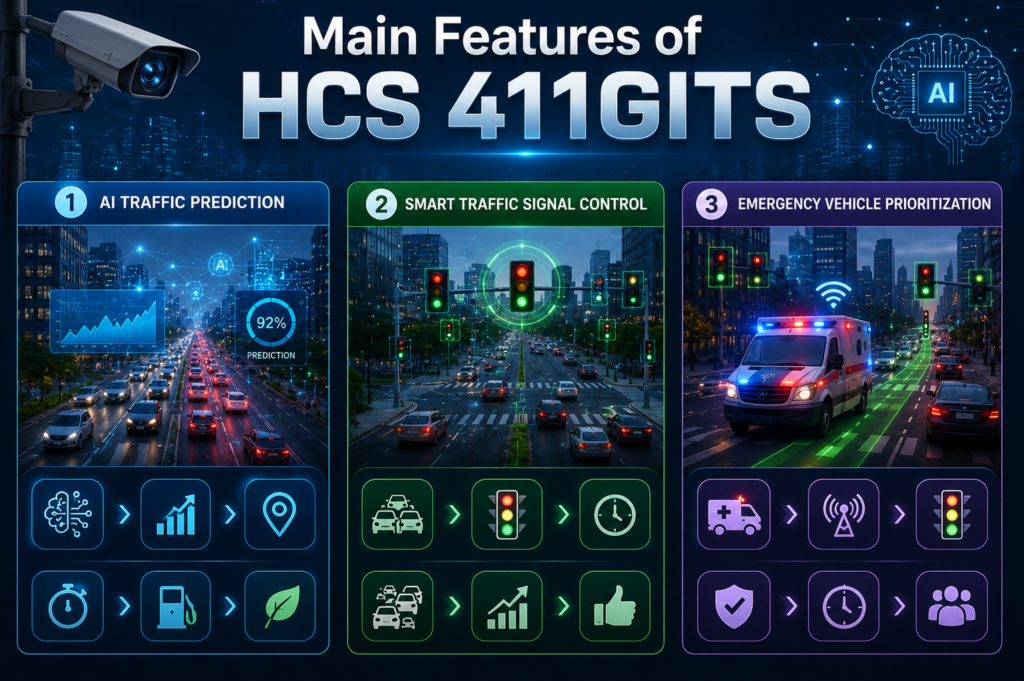
By understanding traffic behavior, the software can predict congestion before it becomes serious. This allows traffic signals to adjust early and helps drivers avoid heavy traffic areas. The result is smoother traffic flow and shorter travel times.
AI traffic prediction also improves fuel efficiency and reduces pollution because vehicles spend less time waiting in traffic. Smart cities benefit from cleaner and more efficient transportation systems.
- Smart Traffic Signal Control
Traditional traffic lights usually follow fixed schedules, even when roads are empty or overcrowded. HCS 411GITS solves this problem with intelligent signal controller services.
The software studies live traffic conditions and automatically changes traffic signal timing based on real-time traffic density. Busy roads receive longer green lights while low-traffic roads receive shorter wait times.
This smart intersection control software reduces traffic bottlenecks, improves road efficiency, and creates better driving experiences for commuters.
- Emergency Vehicle Prioritization
Emergency vehicles often struggle to move through heavy traffic. Delays can become dangerous during medical emergencies, fires, or accidents. HCS 411GITS includes emergency vehicle prioritization technology to solve this issue.
Using V2X communication and IoT integration, the system detects ambulances, police vehicles, and fire trucks approaching intersections. Traffic signals automatically change to create a clear route for emergency responders.
This feature improves emergency response times and increases public safety in crowded urban environments.
Latest Guide: Connectivity Issues HSSGamepad Troubleshooting Tips for Gamers
Technologies Used in HCS 411GITS
- Artificial Intelligence and Machine Learning
Artificial intelligence is the brain behind HCS 411GITS. The platform uses deep reinforcement learning and machine learning frameworks such as TensorFlow and PyTorch to improve traffic decision-making.
The software learns continuously from live traffic data and historical traffic patterns. Over time, the system becomes smarter and better at predicting congestion and optimizing road traffic.
Machine learning also helps improve route prediction services, congestion prediction models, and adaptive traffic control strategies.
- IoT Sensors and Real-Time Data
HCS 411GITS depends heavily on IoT devices and real-time traffic data. Sensors placed across roads and intersections collect information about traffic speed, vehicle counts, weather conditions, and road activity.
The platform processes this data instantly using real-time data processing systems. This allows the software to react immediately to changing traffic conditions.
Real-time traffic insights help city authorities make faster decisions and improve daily transportation management.
- Hybrid Edge-Cloud Computing
One major innovation inside HCS 411GITS is hybrid edge-cloud computing. Instead of sending all traffic data to distant cloud servers, some operations happen locally through edge nodes installed near traffic intersections.
Edge computing allows the system to respond faster because local traffic decisions happen instantly. Cloud servers handle larger tasks like AI model training, digital twin simulation, and long-term traffic analytics.
This hybrid system improves speed, reliability, and scalability for smart city transportation networks.
How HCS 411GITS Was Developed
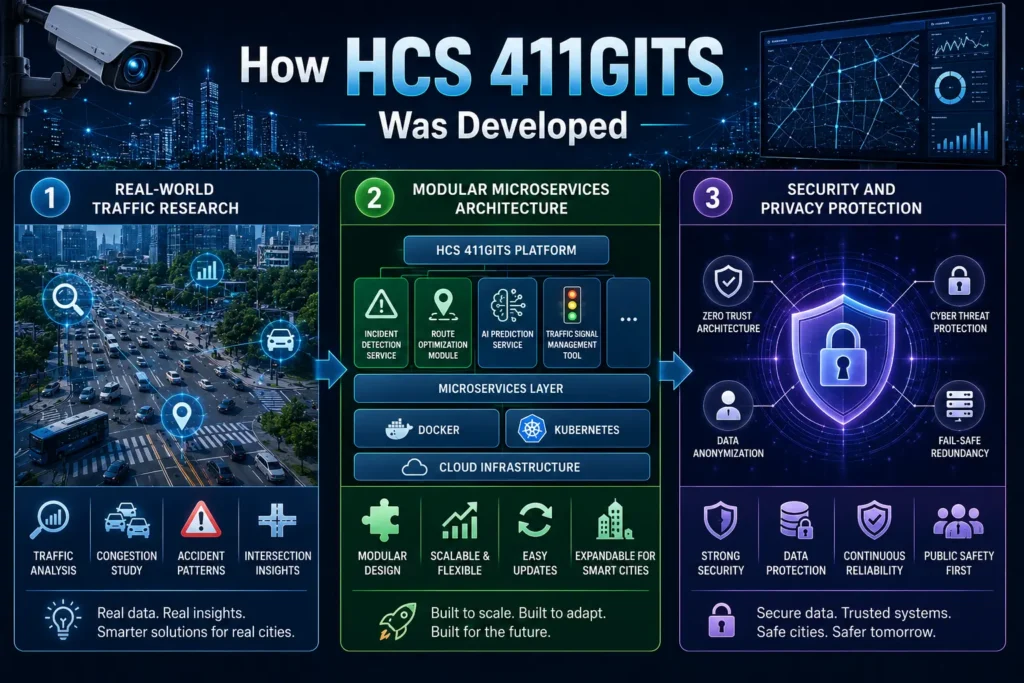
- Real-World Traffic Research
Developers first studied real city traffic behavior before building the software. They analyzed traffic congestion, road bottlenecks, accident patterns, and busy intersections to understand transportation challenges.
This research helped engineers design smarter traffic management solutions that could work effectively in real urban environments instead of only inside test labs.
- Modular Microservices Architecture
The software was built using scalable microservices architecture. Every major function operates independently, including incident detection systems, route optimization modules, AI prediction services, and traffic signal management tools.
This modular approach makes the platform more flexible and easier to update. Cities can add new features or expand traffic systems without shutting down the entire platform.
Docker and Kubernetes were used for containerized deployment, helping the software scale across large smart city environments.
- Security and Privacy Protection
Modern smart city systems handle massive amounts of transportation data, so cybersecurity is extremely important. HCS 411GITS uses zero trust architecture to protect the platform from unauthorized access and cyber threats.
The software also uses data anonymization to protect personal and vehicle information. Fail-safe redundancy systems keep traffic operations running even during technical failures or emergencies.
These security features help cities trust the platform for critical transportation management operations.
What Makes HCS 411GITS Different
Several features make HCS 411GITS stand out from traditional traffic systems:
- AI-powered congestion prediction
- Smart traffic signal optimization
- Real-time traffic monitoring
- Emergency vehicle prioritization
- Autonomous vehicle integration
- Digital twin simulation
- City-wide sensor coordination
- IoT-based transportation management
- Scalable microservices architecture
- Hybrid edge-cloud computing
These technologies help cities create safer, smarter, and more efficient transportation systems for the future.
Future of HCS 411GITS
The future roadmap of HCS 411GITS includes stronger autonomous vehicle support, smarter AI traffic prediction systems, and improved smart city interoperability. Developers are also working on better federated learning technology for enhanced privacy and AI performance.
Future updates may allow cities to coordinate transportation systems across larger regions using connected traffic networks and advanced predictive analytics.
As urban populations continue growing, intelligent transportation systems like HCS 411GITS will become essential for modern city infrastructure.
Conclusion
HCS 411GITS is more than just traffic software. It is a complete smart city transportation platform powered by artificial intelligence, machine learning, IoT integration, and real-time traffic analytics.
By improving traffic flow optimization, reducing congestion, supporting emergency services, and enabling autonomous transportation systems, HCS 411GITS helps cities prepare for the future of intelligent urban mobility.
Its advanced technology, scalable infrastructure, and user-friendly design make it one of the most innovative intelligent transportation solutions available today.